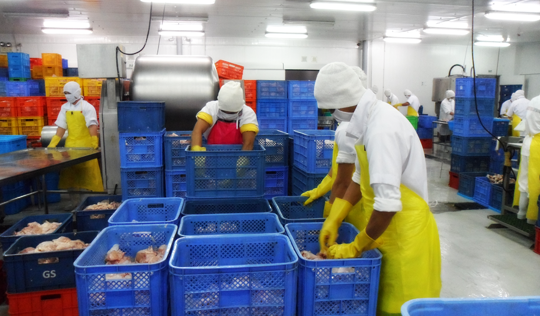
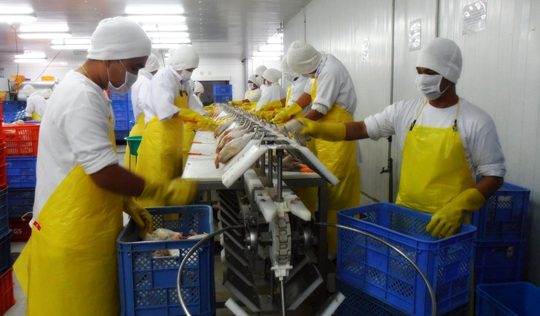
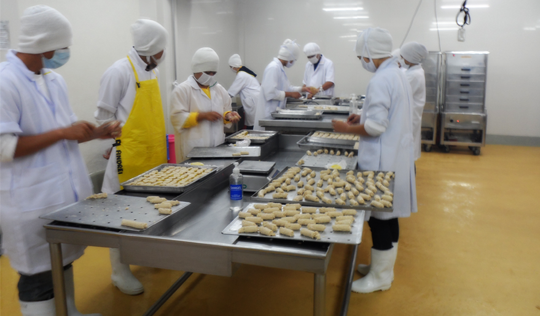
ROMAC Industries, the ROMAC Group’s toll processing division was established in 1994 to respond to the production and manpower need of Magnolia Poultry Processing Plant or MPPP, a client of ROMAC Manpower Services.
Initially, ROMAC’s personnel served as temporary relievers for MPPP’s absent regular workers. Subsequently, the company realized that the ROMAC relievers surpassed their regular workers in efficiency and productivity. This brought on the idea of sub-contracting some of its specialized production processes to a third party, capably trained and competently proficient in adhering and conforming to Magnolia’s high quality standards.
Eventually, ROMAC Industries’ efficient and streamlined operations became the redemption of Magnolia Poultry Processing Plant, saving it from serious financial losses consequent to operational ineptitudes aggravated by fierce competition in the food manufacturing industry.
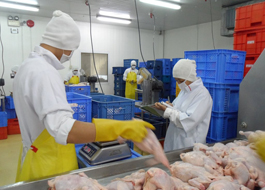
ROMAC Industries was the first and only toll processing plant north of Manila in 1994. Mr. Rene Romero, ROMAC Group’s President converted a small hardware store in Lazatin Boulevard, City of San Fernando Pampanga to house its toll processing operations. What was originally a pilot and experimental division fluorished into a fully operational manufacturing plant with a capacity of 2,500 birds per day.
RELOCATION AND EXPANSION
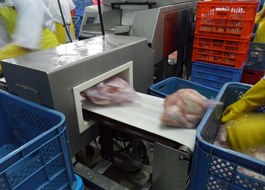
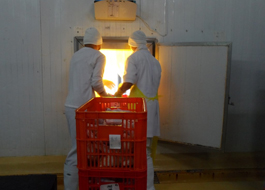
The company’s overwhelming success and Magnolia’s escalating demand for production necessitated the eventual move to a bigger and modern plant. In 1997, ROMAC Industries moved to an improved production plant in Barangay Del Rosario, City of San Fernando Pampanga. The new plant housed its own office and was furnished with a complete line of modern production equipments, cold storage, blast freeezers and its own power supply generator. From a production capacity of 2,500 birds per day, the new and compact plant in Del Rosario can now process 24,000 birds a day, effectively serving almost 95 percent of Magnolia clients’ needs.
RBEST FOODS CORPORATION’s INCEPTION
The years 1994 to 2009 saw the rapid growth of the chicken processing industry in the country, -averaging from 15 to 20 percent escalation rate annually. In 2009, ROMAC Industries decided to build a second plant independent in operations from Magnolia. But even before the completion of its new plant in 2009, KFC became aware of ROMAC and saw the huge potential of toll processing relative to its own operations. Persistently, KFC expressed interest in contracting ROMAC Industries’ services for its toll processing requirements. In April of 2009, at the completion of the second plant in Barangay Del Rosario, RBest Foods Corporation was inaugurated and was exclusively operated for the toll processing needs of KFC.
The decision not to renew its contract with Magnolia was prompted by the need to simplify negotiations, dealing with only one client was remarkably appealing as opposed to serving the multiple clientele of Magnolia, all requiring their own tediously specific processing procedures. Thus in 2010, both plants merged and were exclusively operated for KFC. Later in the year, RBest Foods Corporation opened a branch in Laguna which processes and exports an exclusive KFC food product line to Japan.
CONTRIBUTION TO THE LOCAL COMMUNITY’S DEVELOPMENT
RBest Foods Corporation can claim credit for pioneering the food toll processing in the country and this successfully innovative venture now provides employment and income to the several men and women in Barangay Del Rosario.
RBest Foods Corporation’s feat in tapping the local skills available in the barangay encouraged other manufacturing plants to locate in the area. Presently, several local and multi-national companies have established manufacturing plants in the barangay, providing more employment and income for the people, subsequently increasing the collective purchasing power of the whole community. The local government likewise benefits from this through a corresponding increase in its IRA.
RBest Foods Corporation’s contribution to the local economy is made more essential and significant by its responsiveness to its responsibility to the environment as well. Its waste water treatment facility was immediately granted DENR’s seal of approval and ensures the safety and protection of the local community’s water and ecological systems.
Cognizant of its role as an active and dependable partner of the community in promoting local economic, social and environmental development, Rbest Foods Corporation will continuously aspire to inspire other entrepreneurs and investors in catalyzing business in the countryside.